Economic Development Strategy for Richmond's Historic Hathorn Block Building Town of Richmond, Maine • PIA Industries

A comprehensive economic development strategy for Richmond's historic Hathorn Block Building

Economic Development Reality

Economic development is a priority for many municipalities, however the development and implementation of a successful strategy leaves many communities with less-than-optimal results.

A common experience is one where a community recognizes the need for economic development (i.e. a shift in the economic environment has reduced the quantity and/or quality of contribution sources) at the same time when community leaders are under pressure to suppress municipal spending (minimize the shared financial burden related to the redistribution of the budgetary demands on the fewer remaining contribution sources).

A decrease in the quantity and/or quality of contribution sources place an increased burden on the remaining contribution sources. Leaders representing the community face an immediate pressure to minimize tax increases at the very same moment when public investment is most needed to minimize the longer-term impact of fewer contributors.

Key Insight: This dynamic requires a clear understanding of the conditions that led to a reduction in contribution sources, as well as a plan for adapting to the new opportunities that are offered by the changing economic environment.

Why Care?

Economic growth positively impacts the community as a whole!

Home Value Growth

The largest contributor to the wealth creation for most American families stems from equity gained in their home values over time.

Attract Contributors

A growing economy attracts contributing members interested in allocating their energy in efforts to growing their own resources.

Prevent Brain Drain

Poor economic conditions create brain drain, as motivated youth move to locations that offer potential to produce at their expected levels of success.

Economic growth is essential for the overall benefit of all community members, and investment is a required input for producing the desired outcomes.

Financial Parameters & Human Motivations

Pathway 1: Available Capital

The most direct route to producing a project is to own the full cost outright. An individual or entity with sufficient cash, liquidated assets, or equity can fund the project entirely — no lender required, no collateral needed.

Condition: The producer's available capital must equal or exceed the total cost to produce the project. The producer bears full financial risk and retains full control of the outcome.

Pathway 2: Credit

When full capital is unavailable, credit can bridge the gap — but only when the required collateral exists. Lenders calibrate their exposure based on risk tolerance, and collateral requirements vary by producer type:

Entrepreneur / Business: Typically ~20% collateral required by the lender.

Homeowner / Home Project: Often a lower threshold, reflecting the reduced risk profile of owner-occupied residential development.
The Credit Equation
Total Available Credit  =  Project Ending Asset Value  −  Total Cost to Produce

A lender's willingness to extend credit is bounded entirely by this equation. The spread between what the completed project will be worth and what it costs to produce determines how much credit is available — adjusted downward for the lender's risk tolerance (commonly 20%). When the right side of this equation reaches zero or below, credit disappears entirely.

When the Equation Fails: The Capital Gap
Ending Asset Value < Total Cost to Produce  →  No Credit Available

When a project's Ending Asset Value is less than the Total Cost to Produce, the equation yields a negative result. Credit is not an option. The producer must personally contribute capital to close the gap — reducing the left side of the equation — until the equation holds and credit becomes accessible again. This contribution is made at a loss: the producer knowingly spends more than the project will be worth in order to make the math work for a lender to participate.

Why Would Anyone Move Forward at a Loss?

When a gap exists and credit is unavailable, the motivation to proceed cannot be economic profit. Two forces explain when and why a project moves forward in spite of that loss — and both connect directly to the Human Motivations framework:

Life Experience as Return (LEAR)

When the value of bringing a meaningful project into existence outweighs the financial cost, an individual or entity may move forward while accepting the loss. The return is not measured in dollars — it is measured in purpose, legacy, or quality of life.

Key Condition: This person has the available capital to contribute the gap amount, and consciously accepts the loss — because the experience and outcome of the project carry a value that transcends financial return. They are not indifferent to the loss; they simply value the result more.

Philanthropic Contribution

A philanthropic party — a mission-driven organization, a municipality, a foundation, or an aligned community — can absorb the gap on behalf of others. By covering the difference between cost and value, they restore the conditions under which private investment becomes viable.

Hathorn Block (Richmond): This model is the same mechanism at work in the Hathorn Block initiative — where community-level commitment converts an otherwise impossible capital gap into a foundation upon which private investment and lasting benefit for Richmond’s downtown can be built.
1

Economic Profit or Return on Investment

Given the development, production or investment in a project (an input), expectations of economic profit exist (an output). Opportunities to invest today are aimed at creating future financial resources. This attracts both human (labor) and financial capital (money).

2

Life Experience as Return (LEAR)

The development, production or investment in a project (an input) prioritizes the experience of the outcome (an output) over all expected inputs. A higher value is placed on the accomplishment of the outcome versus the expected cost required to produce the ending result.

3

Philanthropic Motivation

The development, production, or investment in a project (an input), places a higher value on the end result or outcome (an output) over economic profit. Philanthropic individuals or entities are often mission-focused and follow guidelines that promote the benefit of others beyond themselves.

The Hathorn Block Building

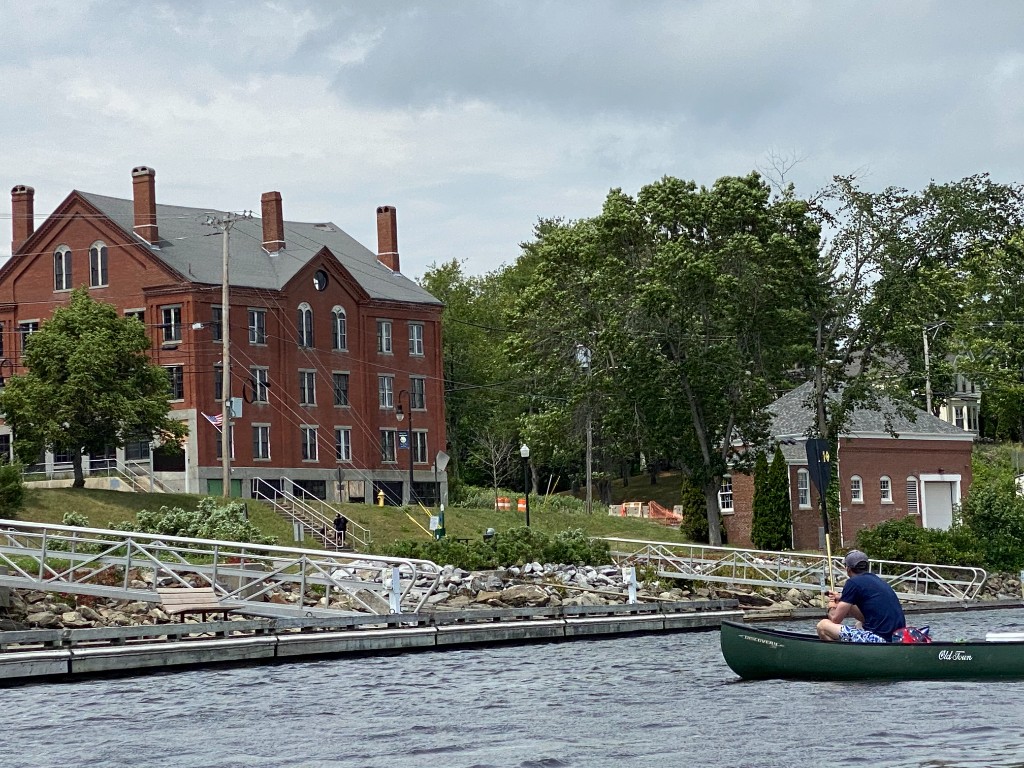
Hathorn Block Building viewed from the Kennebec River
170+
Years Old
15,000
Square Feet
40+
Years Vacant
0.3
Acres

The Hathorn Block Building sits on the corner of Richmond's Main Street and Front Street, overlooking the Kennebec River. The building, built 170+ years ago, sits as a shell of what it used to be; just brick and beams.

The challenge faced by town and its current owners, along with the owners of the past 40+ years, is that the cost to develop is greater than the project's ending value.

Why Has This Building Remained Vacant?

Since the building's original development, the relationship between labor costs and materials has changed. When we combine this fact with the many added code requirements that have evolved our modern renovated buildings into safer more efficient spaces, we get a per square foot development cost that is greater than its ending value.

Statewide Challenge: This is confirmed by the square foot requirements of any new developments. New developments are often of a much greater size (spreading fixed costs over more square feet) or at a much-reduced volume (minimizing code requirements). New developments in towns with less than 50,000 in brick are very rare.

Economic Development Perspective

Anchor Property
A Parcel of Land with Parcel Attributes that have an outsized impact on the Parcel Market Values of nearby properties or an entire neighborhood or town.
Negative Externalities
Costs that are borne by a third party as a result of an economic transaction. A vacant building, with such visibility, suppresses economic activity and reduces demand for nearby properties.

The Hathorn Block is a big, beautiful brick building. Its location and image make it an Anchor Property, which greatly impacts the resources available to the town and its residents. In its current state, the building contributes negatively to the town's economic activity, producing negative externalities.

What is the Solution?

Option 1: Tear Down

$200K+

The cost of dismantling such a big building in such a location is expensive.

Impact: The likelihood of an almost 15,000 square foot building being rebuilt in its location is extremely low. The community would lose its unique village character and a key economic asset.

Option 2: Rebuild

$800K - $2,500,000 GAP

The GAP represents the difference between the cost to develop and the projected ending value.

Impact: Brings the town's "location, location, location" property to life. Creates jobs, economic growth, and increases demand for nearby properties.

Analysis Through Human Motivations

Economic Profit / ROI

The GAP between cost to develop and ending value eliminates this as a possibility for private investment.

Life Experience as Return

The GAP is too great to reasonably expect an individual or entity to accept such a loss for the experience.

Philanthropic Motivation

Given the demographics and the 40+ year vacancy, the capacity for philanthropic investment at this scale is not realistic.

The Answer: Municipal Investment

It is reasonable to expect that any path forward will require an investment by the town to close the gap between the cost to develop and the project's ending value.

Why Rebuild?

Unique Village Character

The size of this building in that location is a gift from the past. It gives the town a unique village, loved by the community and passersby.

Economic Engine Recharge

A vibrant corner lot would attract prospective residents and community members, supporting many natural attributes that already make Richmond great.

Premier Tax Contributor

In a comparative analysis of its ability to contribute to tax commitment, this parcel would be near the top of the list. Today, it sits near the bottom.

Cascading Property Value Growth

Resolving a vacant anchor property increases demand for nearby properties, as the town's identity becomes aligned with an image of success and potential.

State Grant Opportunities

Aligning project goals with State of Maine priorities (lodging availability and food services) makes this project highly competitive for grant funding.

Natural Resource Utilization

The Town of Richmond has the opportunity to harness their natural resource – the town's beauty – to create jobs and economic growth.

The 7-Step Strategy

A systematic approach to economic development

1

Shared Understanding

Step one requires a shared understanding among town leaders that there is opportunity to improve town revenue sources.

Municipal leaders must understand the relationship between current tax revenues from parcels in poor condition versus expectations if parcels were brought to Optimal Parcel Performance.
2

Process Implementation

Step two requires the implementation of a process for identifying underperforming Parcels of Land.

PIA Industries offers tools built to help municipalities identify underperforming Parcels of Land. Anchor Properties or Critical Lots are identified and analyzed to determine their impacts on other nearby parcels. PIA Industries is a related company of Portland Investment Advisors, LLC.
3

Market Analysis

Step three requires the development of a market analysis specific to the municipality to fully understand the root cause of underperformance.

Examination of the town's past combined with analysis of the current economic environment identifies challenges and provides clarity around reasonable alternatives, allowing municipal leaders to weigh expected benefits vs costs.
4

Leadership Alignment

Step four requires the complete alignment of all municipal leaders on the best path forward.

The alignment of municipal leadership, in their understanding of the goal, challenges, and a path forward creates momentum and directs energy towards producing the outcome.
5

Community Education

Step five requires the dissemination of information and details regarding the current state of economic conditions as it relates to the municipality's main revenue source, its Parcels.

Prioritization of educating the community on the process that was taken to arrive at the suggested outcome is critical. If the analysis is thorough and the benefits are clearly understood and widespread, the solution will be widely supported.
6

Public Commitment

Step six requires an official commitment by the town, and showcased by a public vote, to move forward with the economic development strategy.

A public vote clarifies the town's understanding of the economic development plan and its long-term impact. It also acts as a communication beyond the community, signaling a commitment to invest in the future wellbeing of the town.
7

See It Through

Step seven: Execute with commitment and persistence.

Sustained effort and dedication to the plan ensures successful implementation and maximizes the economic development benefits for the entire community.

What We Want to Do

Go through the details and have everybody agree that this is the reality. A shared understanding of the challenges and opportunities creates the foundation for transformative change.